















 Save Product

Product Details
Synonym
FCGR2B, C, CD32b, c, FcRII-b, c, Fc-gamma RII-b, c, Fc-gamma-RIIb, c, CD32, FCG2, IGFR2, CDw32
Source
Human CD32b/c, His Tag (CDB-H5228) is expressed from human 293 cells (HEK293). It contains AA Ala 46 - Pro 217 (Accession # P31994-1). In the region Ala 46 - Pro 217, the AA sequence of Fc gamma RIIB and Fc gamma RIIC are homologus.
Predicted N-terminus: Ala 46
Request for sequenceMolecular Characterization

Other Tags and Version Biotin & Other Labeled Version
This protein carries a polyhistidine tag at the C-terminus.
The protein has a calculated MW of 20.4 kDa. The protein migrates as 28-31 kDa when calibrated against Star Ribbon Pre-stained Protein Marker under reducing (R) condition (SDS-PAGE) due to different glycosylation.
Endotoxin
Less than 0.01 EU per μg by the LAL method / rFC method.
Purity
>95% as determined by SDS-PAGE.
>90% as determined by SEC-MALS.
Formulation
Lyophilized from 0.22 μm filtered solution in PBS, pH7.4 with trehalose as protectant.
Contact us for customized product form or formulation.
Reconstitution
Please see Certificate of Analysis for specific instructions.
For best performance, we strongly recommend you to follow the reconstitution protocol provided in the CoA.
Storage
For long term storage, the product should be stored at lyophilized state at -20°C or lower.
Please avoid repeated freeze-thaw cycles.
This product is stable after storage at:
- -20°C to -70°C for 12 months in lyophilized state;
- -70°C for 12 months under sterile conditions after reconstitution.
ACRO Quality Management System
Customers Also Viewed
Performance Data
SDS-PAGE
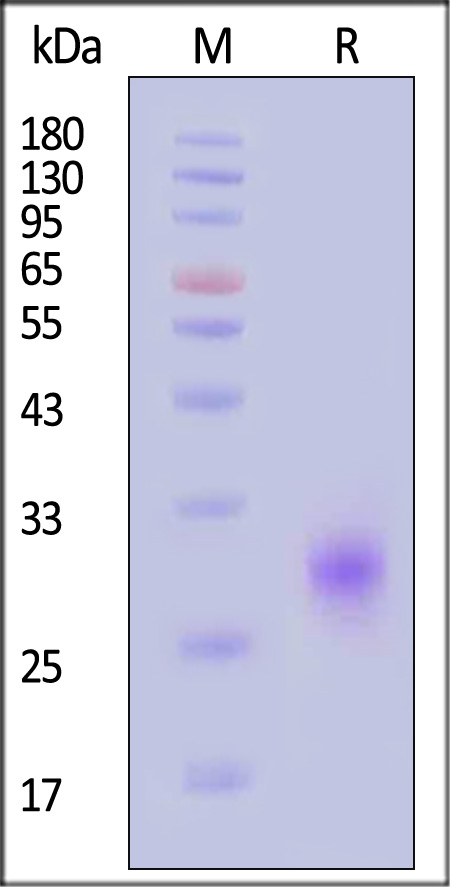
Human CD32b/c, His Tag on SDS-PAGE under reducing (R) condition. The gel was stained with Coomassie Blue. The purity of the protein is greater than 95% (With Star Ribbon Pre-stained Protein Marker).
SEC-MALS
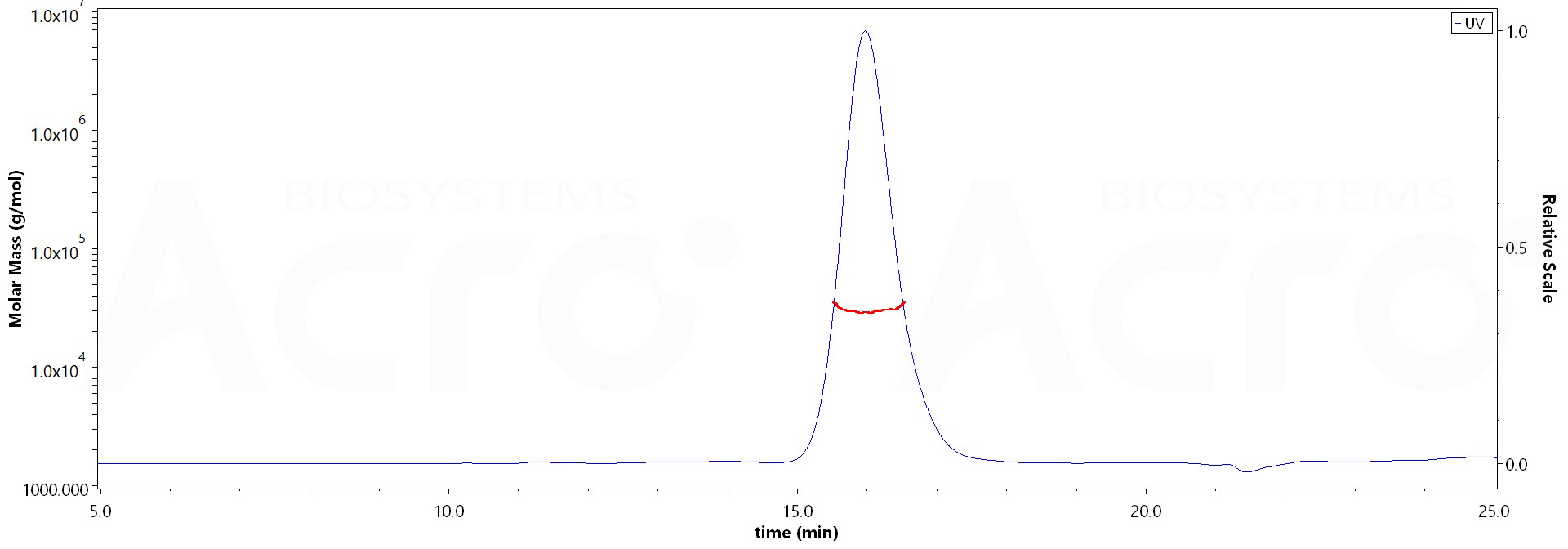
The purity of Human CD32b/c, His Tag (Cat. No. CDB-H5228) is more than 90% and the molecular weight of this protein is around 20-38 kDa verified by SEC-MALS.
Report
Bioactivity-SPR
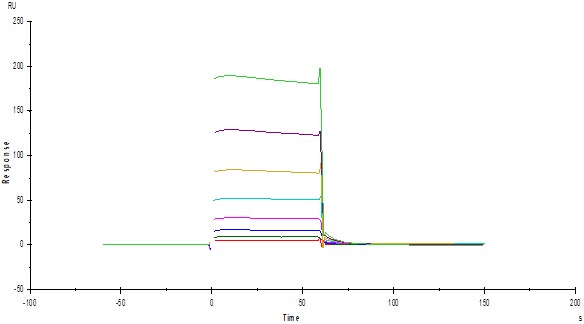
Immobilized Human CD32b/c, His Tag (Cat. No. CDB-H5228) on CM5 Chip via anti-His antibody, can bind Rituximab biosimilar (Cat. No. CD0-M36) with an affinity constant of 5.19 μM as determined in a SPR assay (Biacore T200) (QC tested).
Protocol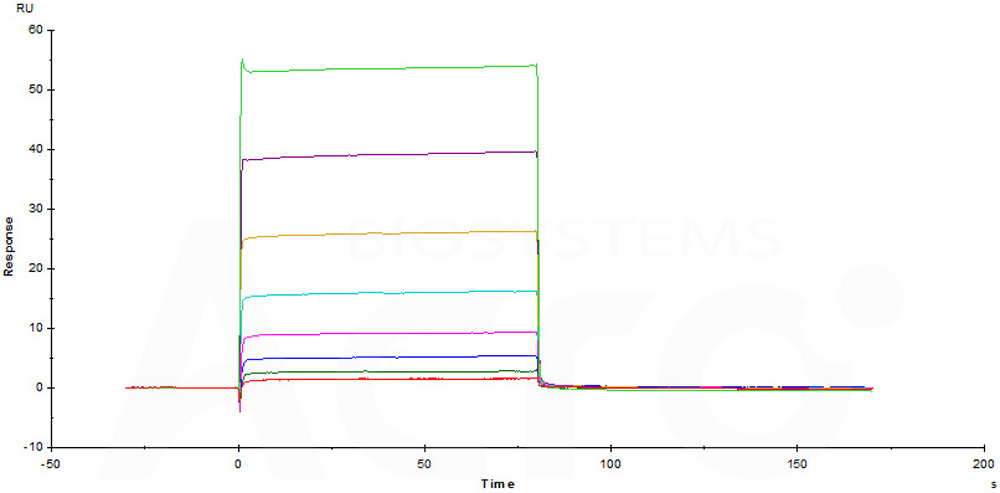
Immobilized Rituximab on CM5 Chip, can bind Human CD32b/c, His Tag (Cat. No. CDB-H5228) with an affinity constant of 5.5 μM as determined in a SPR assay (Biacore T200) (Routinely tested).
Protocol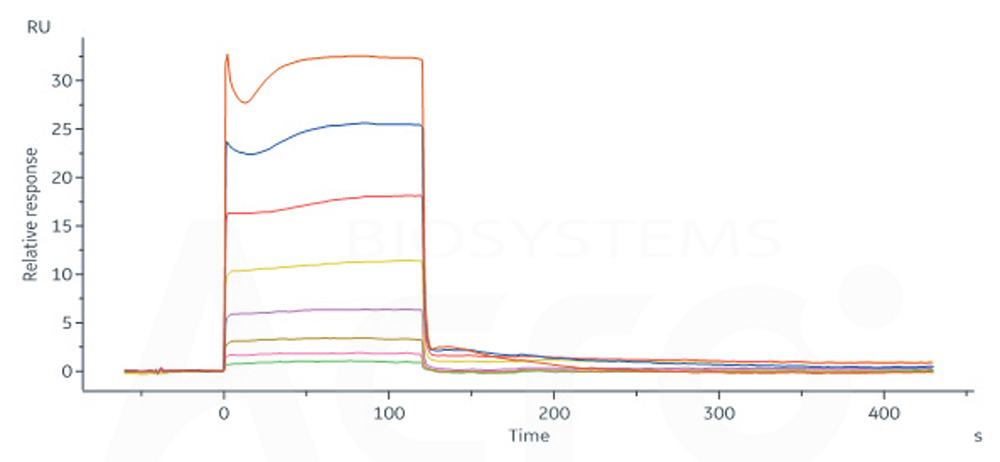
Rituximab captured on Protein A Chip can bind Human CD32b/c, His Tag (Cat. No. CDB-H5228) with an affinity constant of 3.56 μM as determined in SPR assay (Biacore 8K) (Routinely tested).
Protocol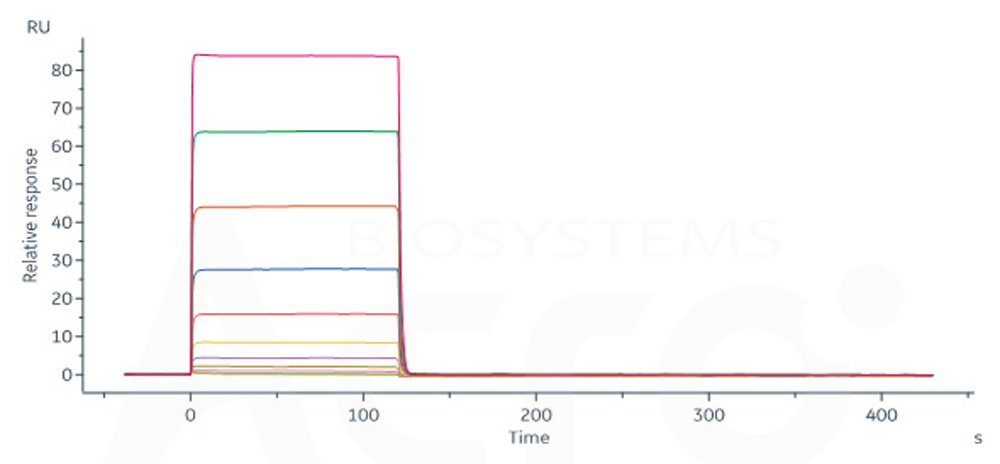
Rituximab immobilized on CM5 Chip can bind Human CD32b/c, His Tag (Cat. No. CDB-H5228) with an affinity constant of 4.09 μM as determined in SPR assay (Biacore 8K) (Routinely tested).
Protocol
Bioactivity-BLI
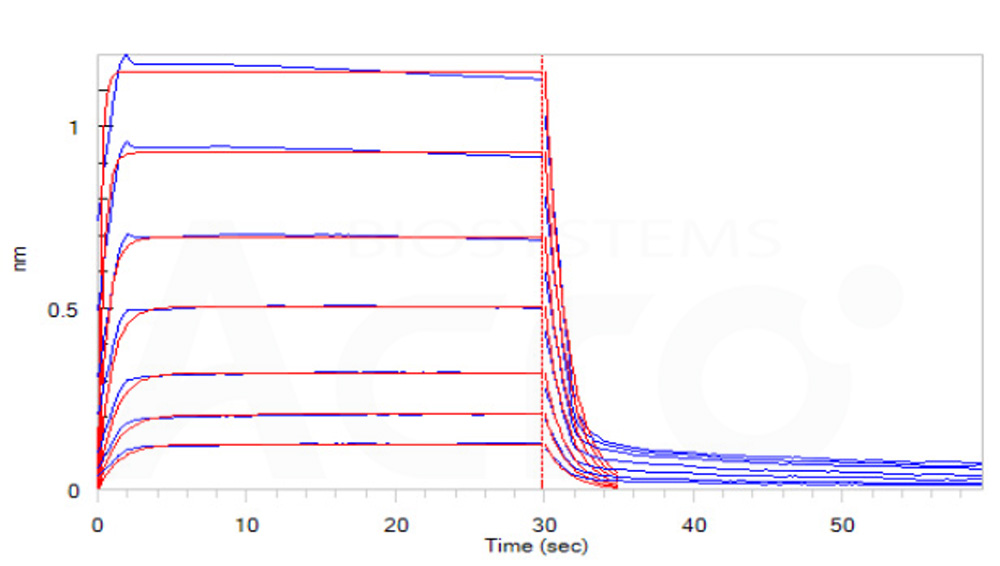
Loaded Human CD32b/c, His Tag (Cat. No. CDB-H5228) on HIS1K Biosensor, can bind Rituximab with an affinity constant of 4.30 μM as determined in BLI assay (ForteBio Octet Red96e) (Routinely tested).
Protocol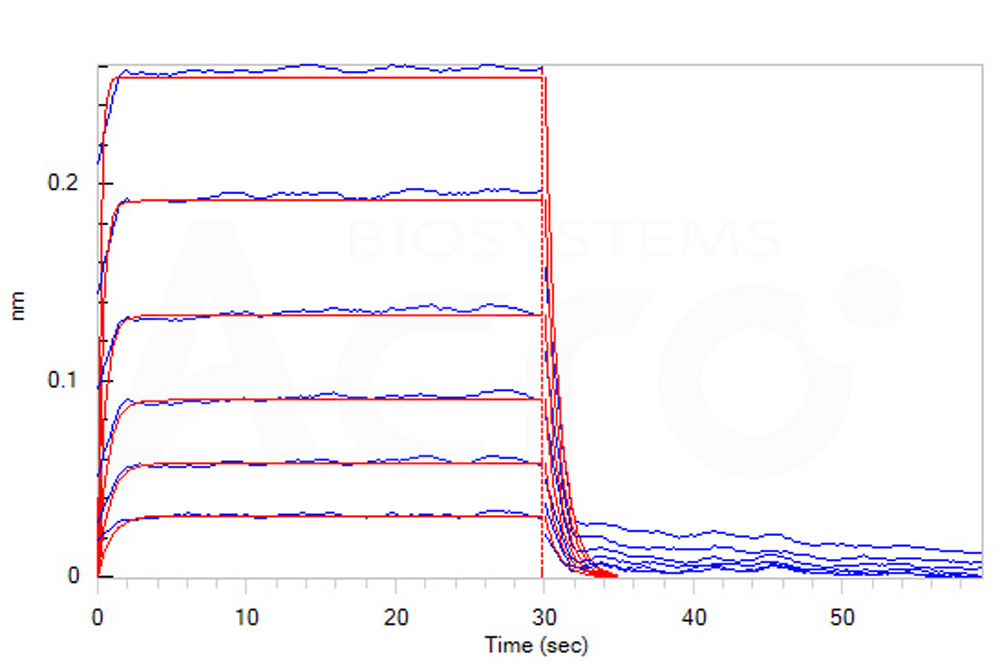
Loaded Rituximab on FAB2G Biosensor, can bind Human CD32b/c, His Tag (Cat. No. CDB-H5228) with an affinity constant of 5.4 μM as determined in BLI assay (ForteBio Octet Red96e) (Routinely tested).
Protocol
Customer Reviews Writing Reviews

Background
There are three genes for human Fcγ RII /CD32 (A, B, and C) and one for mouse Fcγ RII B (CD32B). CD32 is a low affinity receptor for IgG. Low affinity immunoglobulin gamma Fc region receptor II-b (FCGR2B) is also known as CD32b, FCG2, IGFR2. CD32B is expressed on B cells and myeloid dendritic cells. Ligation of CD32B on B cells downregulates antibody production and may, in some circumstances, promote apoptosis. Co-ligation of CD32B on dendritic cells inhibits maturation and blocks cell activation. CD32B may also be a target for monoclonal antibody therapy for malignancies.
Recent Advances
 Drug Development Progress
- English Name:
Low affinity immunoglobulin gamma Fc region receptor II-b
- Category:
- Approved Drugs:
0 Details
- Drugs in Clinical Trials:
5 Details
- Highest Development Stage:
Phase 3 Clinical
 Contact Us


 Drug Candidate Licensing


